
Introduction
Private hypertension treatment in the UK has quietly become one of the fastest-growing areas of self-pay healthcare. NHS GP wait times, fragmented blood pressure follow-up, and the rise of online prescribing have pushed thousands of adults to look beyond the traditional NHS pathway, especially those who already know their numbers are creeping up and want to act before something goes wrong.
If you’re searching for private hypertension treatment in the UK, this guide covers everything you need to make an informed decision: how the process works, who can prescribe, what it should cost, what NICE actually recommends in 2026, and the questions to ask before you hand over a card. It’s written by a GPhC-registered pharmacist, aligned with NICE guideline NG136, and updated to reflect the latest UK guidance.
Quick note: This is general health information, not personal medical advice. Always speak to a registered prescriber about your own treatment.
What Is Hypertension? A Brief Refresher
Hypertension, also known as high blood pressure, is sustained pressure in your arteries above the level your circulation is designed to handle over the long term. It rarely causes symptoms, which is precisely why it’s so dangerous: untreated, it’s one of the largest modifiable causes of stroke, heart attack, heart failure, kidney disease and vascular dementia in the UK.
The British Heart Foundation estimates that around one in four UK adults has high blood pressure, and a significant share don’t yet know it. According to the NHS, high blood pressure is diagnosed when your clinic reading is consistently 140/90 mmHg or higher, and the diagnosis is confirmed by either a 24-hour ambulatory blood pressure monitor (ABPM) or 7 days of home blood pressure monitoring (HBPM) averaging 135/85 mmHg or higher.
Two readings, two settings, that’s the standard the NHS and private services should both follow.
Why People Choose Private Hypertension Treatment in the UK
The reasons people choose private care for blood pressure are remarkably consistent. From recent enquiries and patient feedback in the sector, five themes dominate.
1. Speed. A “routine” GP appointment for a blood pressure review can involve a 2–4-week wait in many parts of the UK. A private consultation can usually be booked within 24–72 hours.
2. Continuity. NHS GP rotas mean it’s common to see a different clinician every time. With a private prescriber, you typically see the same person at every review, which matters for blood pressure, where small medication tweaks compound over time.
3. Time per appointment. A 10-minute NHS slot can feel rushed when you have questions about side effects, lifestyle, or whether you really need to be on medication. Private consultations usually run 20–30 minutes.
4. Convenience. Online private hypertension services let you have a consultation at home or on a lunch break, with home delivery of medication. For working adults, that often makes the difference between starting treatment and putting it off another year.
5. Holistic cardio-metabolic care. Hypertension rarely travels alone. It’s frequently bundled with raised cholesterol, prediabetes or type 2 diabetes, and lifestyle drivers. Specialist private services that focus on cardiometabolic risk as a whole, rather than just a single number, are increasingly popular.
NHS vs Private Hypertension Treatment UK: How They Compare
| Feature | NHS Hypertension Care | Private Hypertension Treatment UK |
| Cost to patient | Free at point of use; £9.90 per NHS prescription item in England | Self-pay; £150–£350 initial consultation typical, £10–£40/month medication |
| Time to first appointment | Often 1–4 weeks | Usually 24–72 hours |
| Consultation length | ~10 minutes | 20–30 minutes |
| Continuity | Variable (rotas, locums) | Same prescriber for each visit |
| ABPM access | Available, may have to wait | Same-week, typically £200–£485 |
| Choice of medication | Formulary-led | Wider choice, including branded options |
| Online delivery | Limited NHS digital options | Fully online services available |
| Best for | Stable, well-controlled hypertension | Faster start, complex cases, busy professionals, those wanting cardio-metabolic focus |
Private hypertension treatment is not “better medicine” than the NHS for most people; it’s the same medicine, delivered faster and with more time and choice. That’s what you’re paying for.
How Private Hypertension Treatment Works in the UK: Step by Step
A reputable private hypertension service will follow a clear, NICE-aligned pathway. Here’s what you should expect.
Step 1: Initial Consultation
When you start private hypertension treatment in the UK, your first appointment covers your full medical history, family history of cardiovascular disease, current medications, lifestyle, and any symptoms. The prescriber will measure your blood pressure (or review readings you’ve taken) and order any tests needed before treatment.
Step 2: Confirming the Diagnosis (ABPM or HBPM)
This is the step many private services unfortunately skip, and you should walk away from any provider who tries to start you on lifelong medication based on a single high reading in the consultation room.
NICE is unambiguous: a diagnosis of hypertension requires confirmation with either:
24-hour ambulatory blood pressure monitoring (ABPM) — a small wearable device that takes readings every 30 minutes during the day and hourly at night, or
Home blood pressure monitoring (HBPM) — twice-daily readings for 7 days, with the first day discarded.
The threshold for confirming hypertension on either is an average of 135/85 mmHg or higher.
Step 3: Blood Tests and Risk Assessment
Before starting treatment, NICE recommends:
- Urea and electrolytes (kidney function)
- HbA1c (for diabetes screening)
- Lipid profile (cholesterol)
- Urine albumin: creatinine ratio (kidney protein leak)
- 12-lead ECG
- A formal 10-year cardiovascular risk score (QRISK3)
This bloodwork is essential — both to rule out secondary causes and to identify the people who need treatment most urgently, regardless of the BP number itself.
Step 4: The Treatment Plan
Treatment is always a combination of lifestyle measures and, where indicated, medication. A good private prescriber will explain:
- The target. What blood pressure are you aiming for (usually under 140/90 in clinic and under 135/85 at home for most adults under 80)
- The medication choice and why. ACE inhibitors, ARBs, calcium channel blockers and thiazide-like diuretics are first-line — the right one depends on your age, ethnicity, comorbidities and side-effect profile.
- The lifestyle changes that genuinely move the dial. Salt reduction, weight loss, alcohol moderation, exercise, sleep, and stress management all have measured effects on BP.
- What to monitor at home. Most patients are asked to keep a home BP log between consultations.
Step 5: Ongoing Review
Hypertension is a long-term condition, and treatment is rarely “set and forget”. A typical private review schedule looks like:
- 2–4 weeks after starting or changing medication: check tolerability, recheck BP, repeat U&Es if on an ACE inhibitor, ARB or diuretic.
- 3 months in: full review, dose adjustment, escalate to second-line if not at target.
- Every 6–12 months thereafter, once stable.
If your private service doesn’t structure follow-up like this, that’s a red flag.
Who Can Provide Private Hypertension Treatment in the UK?
There are four main categories of clinicians you’ll encounter when looking for private hypertension treatment in the UK
Private GPs. Generalists, usually CQC-registered, who treat hypertension as part of broader primary care. – Initial consultation typically £150–£250.
Consultant cardiologists. Specialists, GMC-registered, often based in private hospitals such as HCA, Spire, BMI/Circle Health Group or Harley Street clinics. Initial consultation typically £250–£350+. Best route if your hypertension is resistant, secondary, or complicated by structural heart disease.
Pharmacist Independent Prescribers (IPs). GPhC-registered pharmacists with an additional prescribing qualification are increasingly the backbone of online private chronic disease services. They tend to specialise (cardio-metabolic, weight, women’s health, mental health) and usually offer the lowest price point with the longest consultation time per pound spent. (For a deeper dive into what a pharmacist IP actually does, see our Ultimate Guide to Pharmacist Independent Prescribers in the UK.)
Other Independent Prescribers. Nurse, paramedic and physiotherapist IPs also exist; their role in private hypertension care is more limited but growing.
For most uncomplicated adult hypertension, a pharmacist IP or a private GP working to NICE NG136 will deliver the same clinical outcome as a cardiologist at a fraction of the cost. Cardiology referral is appropriate where there’s resistant hypertension, suspected secondary causes, end-organ damage, or co-existing arrhythmia or heart failure.
How Much Does Private Hypertension Treatment Cost in the UK?
Pricing for private hypertension treatment in the UK varies more than people expect. As a rough guide for 2026:
| Component | Typical Private Cost (UK) |
| Initial consultation (private GP) | £150–£250 |
| Initial consultation (cardiologist) | £250–£350+ |
| Initial consultation (pharmacist IP, online) | £30–£100 |
| 24-hour ABPM | £200–£485 |
| Cardio-metabolic blood panel | £100–£300 |
| ECG | £50–£120 |
| Echocardiogram (if indicated) | £350–£600 |
| Follow-up consultation | £80–£200 |
| Monthly medication (single agent, generic) | £10–£25 |
| Monthly medication (combination therapy) | £25–£60 |
Where the savings are. Online pharmacist-IP-led services typically combine the consultation, prescription and dispensing into one bundled price, with no premises overhead, and use NHS-grade generics. That’s where the meaningful price gap lives. A complete first-year private hypertension package at a specialist online clinic can come in well under £500, where a hospital cardiology pathway with ABPM, echocardiogram and three follow-ups can easily exceed £1,500.
The cheaper route isn’t automatically the right one, but for uncomplicated hypertension, it usually is.
NICE Guidelines: How Hypertension Should Be Treated in 2026
Any private hypertension service worth paying for will follow NICE guideline NG136, the UK gold standard for hypertension diagnosis and management. NG136 was last updated on 26 February 2026, with a new recommendation to offer healthy-living advice to people whose BP is elevated but not yet diagnosed with hypertension.
The framework, simplified:
Diagnosis Thresholds
- Clinic BP ≥140/90 mmHg → confirm with ABPM or HBPM.
- ABPM/HBPM average ≥135/85 mmHg → diagnosis confirmed
When to Start Medication
- Stage 1 hypertension (clinic 140/90–159/99, ABPM/HBPM 135/85–149/94): offer treatment if under 80, and you have target organ damage, established cardiovascular disease, type 2 diabetes, kidney disease, or a 10-year QRISK ≥10%.
- Stage 2 hypertension (clinic ≥160/100, ABPM/HBPM ≥150/95): offer treatment regardless of age.
- Severe hypertension (clinic ≥180/120): same-day specialist assessment if any signs of end-organ damage, otherwise urgent investigation.
Blood Pressure Targets
| Patient group | Clinic target | ABPM/HBPM target |
| Adults under 80 (incl. T2DM) | <140/90 | <135/85 |
| Adults 80 and over | <150/90 | <145/85 |
| CKD (ACR ≥70 mg/mmol) | 130/80 | <125/75 |
Treatment Pathway (Simplified)
- Under 55 and not of African or Caribbean family origin: start with an ACE inhibitor or ARB.
- 55 and over, or any age with African or Caribbean family origin: start with a calcium channel blocker.
- Step 2: Add the other class above (or a thiazide-like diuretic if a CCB isn’t tolerated).
- Step 3: combine ACEi/ARB + CCB + thiazide-like diuretic.
- Step 4 (resistant hypertension): add spironolactone (if potassium ≤4.5) or further beta- or alpha-blocker; specialist input recommended.
A good private prescriber will explain which step you’re on and why, and what would trigger moving to the next.
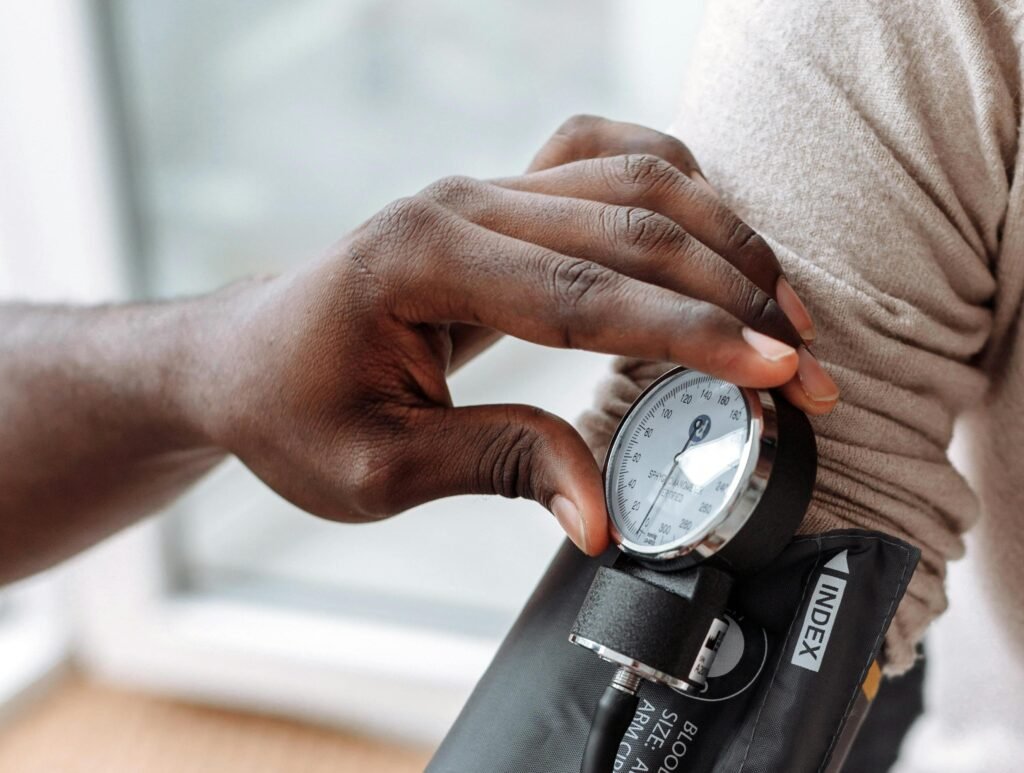
Lifestyle Changes That Genuinely Lower Blood Pressure
Medication isn’t the only lever. Evidence-based lifestyle changes can reduce systolic BP by 5–15 mmHg — often enough to delay or avoid medication, or reduce the dose needed.
- Reduce salt to under 6 g/day. The average UK intake is closer to 9 g — bread, processed meat, ready meals and sauces are the big contributors.
- Lose excess weight. Roughly 1 mmHg drop per 1 kg lost, up to about 10 mmHg.
- Move regularly. 150 minutes of moderate aerobic activity per week, brisk walking counts, drops systolic BP by 5–8 mmHg.
- Cut alcohol. Stay within 14 units/week, spread over 3+ days.
- DASH-style eating. Plenty of vegetables, fruit, whole grains, fish, nuts; less red and processed meat.
- Sleep. Untreated obstructive sleep apnoea is a major reversible cause of resistant hypertension. Get screened if you snore heavily, wake unrefreshed, or have a high neck circumference.
- Stress and caffeine. Real but smaller effects; worth attention if your readings spike at work.
A serious private prescriber will spend time on these and not just skip past them to write a prescription.
Common Hypertension Medications: A Quick Tour
The first-line drugs you’re most likely to be offered, in plain English:
- ACE inhibitors (ramipril, lisinopril, perindopril): dilate blood vessels and protect the kidneys. Common side effect: dry cough.
- ARBs (losartan, candesartan, irbesartan): same job as ACE inhibitors, no cough. Often used in adults of African or Caribbean family origin in preference to ACE inhibitors.
- Calcium channel blockers (amlodipine, nifedipine): relax artery walls. Common side effect: ankle swelling (oedema).
- Thiazide-like diuretics (indapamide): help the kidneys excrete more salt and water. Watch sodium and potassium.
- Spironolactone: used in resistant hypertension as step 4. Needs potassium monitoring.
- Beta-blockers (bisoprolol, atenolol): no longer first-line for uncomplicated hypertension, but used where there’s coexisting heart disease, arrhythmia, or in younger people who can’t tolerate ACEi/ARBs.
ACE inhibitors and ARBs are not used in pregnancy; anyone who could become pregnant should discuss alternatives with their prescriber. Please always disclose all other medications and supplements at the consultation.
How to Choose a Private Hypertension Treatment UK service
Use this checklist before you pay anything.
- Is the prescriber registered? GPhC for pharmacists, GMC for doctors, NMC for nurses; all registers are public and free to search.
- Is the service CQC-registered (if England) or equivalent? Diagnosis and prescribing of hypertension is a regulated activity.
- Will the diagnosis be confirmed with ABPM or HBPM before lifelong medication is started?
- Is the consultation at least 20 minutes, and is follow-up baked in (not charged ad hoc)?
- Are baseline bloods, U&Es and ECGs ordered before starting treatment, in line with NICE?
- Is pricing transparent — total annual cost, not just the headline first consultation?
- Do you see the same prescriber at every review?
- What’s the policy if you have side effects at 11 pm on a Sunday?
- Is the service NICE NG136-aligned, and will they say so in writing?
- Are reviews independent? Trustpilot and Google reviews are more useful than testimonials on the company’s own site.
Any provider unwilling to answer those plainly is not the right provider.
CardivaRx: Pharmacist-Led, Cardio-Metabolic Specialist Care (Coming 2026)
CardivaRx is being built specifically to address this gap: a private cardiometabolic prescribing service led by a GPhC-registered pharmacist Independent Prescriber, treating hypertension, type 2 diabetes, and raised cholesterol together rather than in isolation. For a complete guide to lipid management, see our article on private cholesterol treatment in the UK. The model is online-first, NICE NG136-aligned, with structured ABPM/HBPM diagnosis, baseline blood tests, longer consultations, and continuity of prescriber.
We’re pre-launch while the Independent Prescribing qualification is finalised, but you can register your interest now to be first in line when the service opens, and to be the first to receive new evidence-based guides like this one.
Frequently Asked Questions
Can I get private hypertension treatment without seeing my NHS GP first? Yes. You don’t need a GP referral to access private hypertension treatment in the UK. A reputable private service will take a full history, request appropriate tests and confirm diagnosis independently. They should, with your consent, share the outcome with your NHS GP for joined-up care.
Is online private hypertension treatment safe? When delivered by a registered prescriber, with proper diagnostic confirmation (ABPM or HBPM), baseline bloods, structured follow-up and 24-hour safeguarding pathways for side effects, online hypertension treatment is as clinically safe as in-person care for the majority of adults with uncomplicated hypertension. Resistant or secondary hypertension should usually be managed with at least some in-person specialist input.
How quickly can I start medication privately? With most private services, you can complete your initial consultation within 24–72 hours and start medication within a week, provided the diagnosis is confirmed, and baseline bloods are clear. Anyone offering same-day prescriptions for lifelong antihypertensive medication without confirmation of diagnosis is cutting clinical corners.
Will my private prescription be cheaper than an NHS one? For people who don’t pay for NHS prescriptions (over 60s, exempt categories), the answer is no. For everyone in England paying the £9.90 NHS prescription charge, generic antihypertensives bought on a private prescription via a competitive online pharmacy can sometimes work out cheaper per item, especially for combination therapy.
Can a pharmacist prescribe blood pressure medication in the UK? Yes, if they hold the Independent Prescribing (IP) qualification annotated on their GPhC register entry, and prescribe within their declared scope of practice. Cardio-metabolic conditions, including hypertension, are a recognised IP scope.
What’s the difference between a private GP and a private pharmacist prescriber for hypertension? A private GP is a generalist who treats hypertension as part of broader primary care. A pharmacist Independent Prescriber operating within a cardiometabolic scope focuses specifically on conditions such as hypertension, type 2 diabetes, and dyslipidaemia. Both work to NICE NG136. Pharmacist IP services typically cost less and offer longer consultation time, while private GPs are better suited to multi-system or undifferentiated symptoms.
What blood pressure reading is considered an emergency? Clinic readings of 180/120 mmHg or higher require a same-day medical assessment, especially with chest pain, breathlessness, sudden visual changes, severe headache, or neurological symptoms. In that situation, call 111 or 999, not a private clinic.
Final Thoughts
Private hypertension treatment in the UK isn’t a luxury or a workaround. For a growing number of UK adults, it’s a way to get faster, more thorough, more continuous blood pressure care than the NHS can currently deliver, at a price point that continues to fall as pharmacist-led online services scale.
The two things that matter most when choosing a service are simple: is the prescriber registered, and is the care NICE NG136-aligned? Get those right, and private hypertension treatment can be a genuinely good clinical decision, not just a convenient one.
If you’d like to be among the first to access CardivaRx when we launch, register your interest here. And if you want to understand the regulatory backbone of services like ours, our companion guide on Pharmacist Independent Prescribers in the UK is the place to start.
For an equivalent guide to private type 2 diabetes treatment in the UK, see our complete 2026 guide to private T2DM care.
References
- NICE. Hypertension in adults: diagnosis and management (NG136). Last updated 26 February 2026. https://www.nice.org.uk/guidance/ng136
- NHS. High blood pressure (hypertension). https://www.nhs.uk/conditions/high-blood-pressure-hypertension/
- British Heart Foundation. High blood pressure. https://www.bhf.org.uk/informationsupport/risk-factors/high-blood-pressure
- British and Irish Hypertension Society. Position statements on BP thresholds and targets.
Disclaimer
This article is general health information and does not constitute personal medical advice. CardivaRx is in pre-launch as the founder completes the Independent Prescribing qualification. No prescribing services are currently being offered. Always consult a registered healthcare professional about your own treatment.
Pingback: The Ultimate Guide to Pharmacist Independent Prescribers in the UK — 5 Things You Need to Know | CardivaRx